

Institutional Research Strengths
The mission of the Office of Research, Creativity and Economic Development (RCED) is to advance university success in research, scholarship, and creative activity through exemplary service to the faculty, staff, and student corps. The following research areas are institutional strengths and lie at the intersection of having a critical mass of active inter-disciplinary researchers at NMSU, being a national priority or challenge, and aligning with the goals of NMSU LEADS 2025.
1. Artificial Intelligence and Machine Learning
Strengths and interests at NMSU include: AI, bioinformatics, data mining, knowledge representation and reasoning, machine learning and deep learning, sensing and sensor development, signal processing, and applications of AI in agriculture, cybersecurity, and finance.
This area aligns with:

2. Biomedical Science
Strengths and interests at NMSU include: bioinformatics, biomedical engineering, cancer research, cell signaling and regulation, community health, drug discovery, imaging technology, molecular biology, reproduction, and vector biology.
This area aligns with:
3. Energy, Environment, and Water
Strengths and interests at NMSU include: (Energy) photovoltaics, smart grids; (Environment) environmental microbiology, policy, wastewater treatment; (Water) conservation, desalination, management, efficient water use in food processing and oil and gas production, i.e. produced water.
This area aligns with:
4. Food Production, Safety, Science, and Security
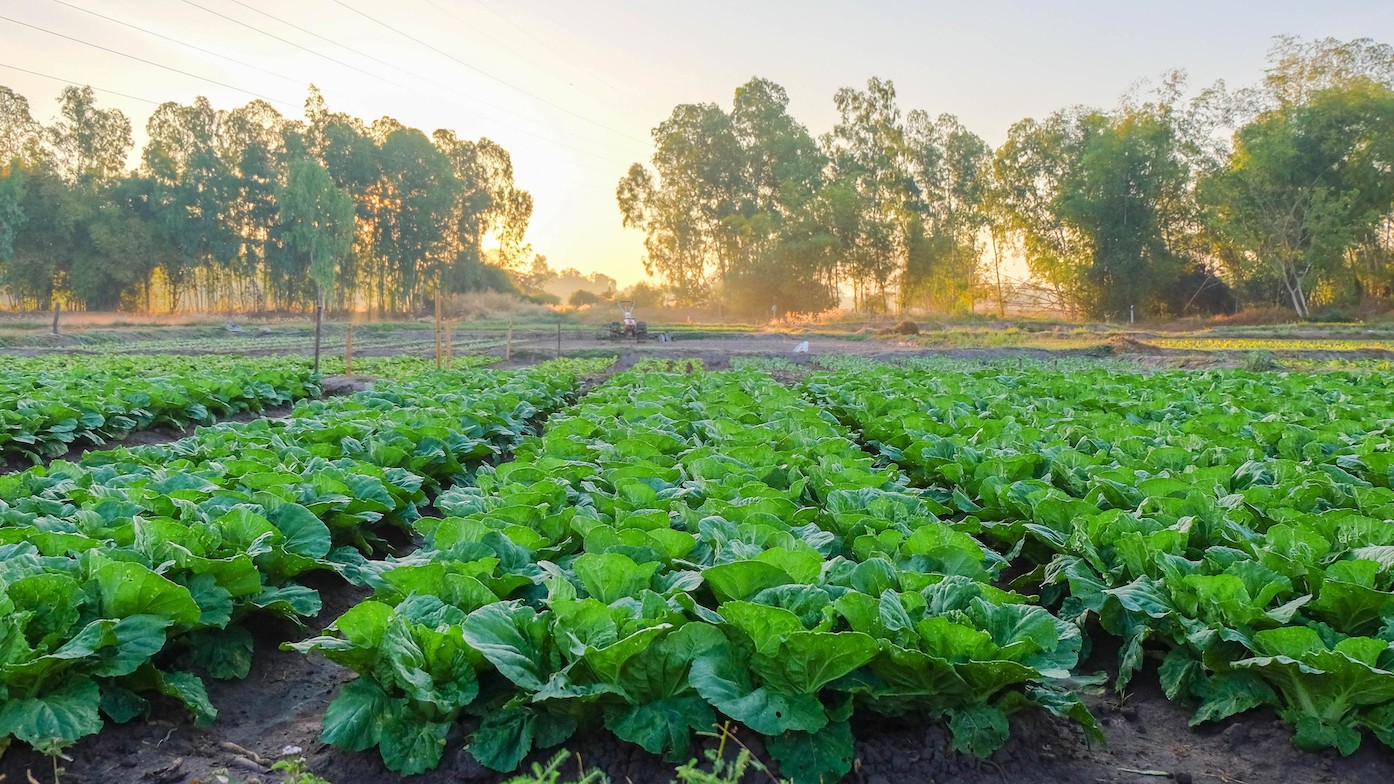
Strengths and interests at NMSU include: agriculture and food production in arid lands, food safety, food science and technology, food security including supply chain and logistics, food sustainability including bioprocessing and microbiology.
This area aligns with:
4. Transforming STEM Education
Strengths and interests at NMSU include: career pathways, K-12 family engagement curriculum, extra-curricular, professional/teacher development, teaching diverse populations, and pedagogy.
Activity: In Progress: STEM ED Center
This area aligns with:
References
[DOD1] Department of Defense, "Digital Modernization Strategy," retrieved from https://media.defense.gov/2019/Jul/12/2002156622/-1/-1/1/DOD-DIGITAL-MODERNIZATION-STRATEGY-2019.PDF
[DOD2] Department of Defense, "Modernization Priorities," retrieved from https://www.cto.mil/modernization-priorities/
[DOE1] Department of Energy, Office of Science, "Initiatives of Special Priority: Artificial Intelligence and Machine Learning,” retrieved from https://www.energy.gov/science/initiatives/artificial-intelligence-and-machine-learning
[DOE2] Department of Energy, Office of Science, "Initiatives of Special Priority: Advanced and Sustainable Energy,” retrieved from https://www.energy.gov/science/initiatives/advanced-and-sustainable-energy
[LEADS1] New Mexico State University, "LEADS 2025: Global Challenges” retrieved from https://www-1888.nmsu.edu/LEADS/
[LEADS2] New Mexico State University, "LEADS2025 Objective 3.3: Improve PK-20 Science, Technology, Engineering and Math (STEM) education," retrieved from https://www-1888.nmsu.edu/LEADS/goal3.html
[LEADS3] New Mexico State University, "LEADS 2025: Objective 2.2: Intentionally grow humanities, social sciences and creative arts to achieve comprehensive excellence in research and creative activity," retrieved from https://www-1888.nmsu.edu/LEADS/goal2.html
[NAE1] The National Academy of Engineering, "Grand Challenges for Engineering: Make Solar Energy Economical,” retrieved from http://www.engineeringchallenges.org/challenges/solar.aspx
[NAE2] The National Academy of Engineering, "Grand Challenges for Engineering: Manage the Nitrogen Cycle,” retrieved from http://www.engineeringchallenges.org/9132.aspx
[NAE3] The National Academy of Engineering, "Grand Challenges for Engineering: Provide Access to Clean Water,” retrieved from http://www.engineeringchallenges.org/challenges/water.aspx
[NAE4] The National Academy of Engineering, "Advance Personalized Learning,” retrieved from http://www.engineeringchallenges.org/challenges/learning.aspx
[NSB] National Science Board, "Vision 2030," retrieved from https://www.nsf.gov/nsb/publications/2020/nsb202015.pdf
[NSF1] National Science Foundation, "NSF's 10 Big Ideas: Harnessing the Data Revolution," retrieved from https://www.nsf.gov/news/special_reports/big_ideas/harnessing.jsp
[NSF2] National Science Foundation, "NSF's 10 Big Ideas: Understanding the Rules of Life," retrieved from https://www.nsf.gov/news/special_reports/big_ideas/life.jsp
[NSF3] National Science Foundation, "NSF's 10 Big Ideas: Enhancing Science and Engineering Education through Diversity," retrieved from https://www.nsf.gov/news/special_reports/big_ideas/includes.jsp
[NSF5] National Science Foundation, "NSF's 10 Big Ideas: Growing Convergence Research", retrieved from https://www.nsf.gov/news/special_reports/big_ideas/convergent.jsp
[NSTC] National Science and Technology Council, "National Artificial Intelligence Research and Development Strategic Plan," retrieved from https://www.nitrd.gov/pubs/National-AI-RD-Strategy-2019.pdf
[USAID1] USAID, "Grand Challenge for Development: Powering Agriculture," retrieved from https://poweringag.org
[USAID2] USAID, Grand Challenge for Development: Water and Energy for Food," retrieved from https://we4f.org
[USAID3] USAID, "Grand Challenge for Development: Securing Water for Food," retrieved from https://securingwaterforfood.org
[USDA1] Department of Agriculture, "Dual Purpose with Dual Benefit: Research in Biomedicine and Agriculture," retrieved from https://nifa.usda.gov/resource/afri-interagency-programs#DPDB
[USDA2] Department of Agriculture, "Big Data, Informatics, and Smart Communities," retrieved from https://nifa.usda.gov/resource/afri-interagency-programs#BigData
[USDA3] Department of Agriculture, "Challenge Areas: Food Safety, Food Security, and Water," retrieved from https://nifa.usda.gov/challenge-areas